Why Should You Care?
Breaking the chains that bind us


I dedicate this first edition of my Substack entry to my best friend, Kevin Herrick, who continues to be wrongfully incarcerated for a crime he did not commit. You can see more of his story at kevinisnext.com. Thank you for subscribing to this Substack and for caring. Together, we can make a difference.
***
As many of you are aware, I have recently been released from prison after serving nearly 36 years for the murder of my first wife, Michelle. Thanks in large part to the God I serve, along with many incredible people almost too numerous to name, the real murderer has been identified and has confessed in vivid detail to the crime.
Of course, this is now the subject of the worldwide podcast phenomenon, Bone Valley, and I am forever grateful to Gilbert King, Kelsey Decker, Jason Flom, and many others who have dedicated their time and resources in putting this award-winning podcast together.
I am especially grateful for the nearly 17 million people (and counting) who have downloaded this podcast, listened intentionally, and come away knowing that I am truly innocent of this horrendous crime.
Because of all of you, my story is very well known, and your support has led to my parole this past year and I believe it will continue to lead to my eventual exoneration. To all of you who fall into the category of supporters, I say thank you on behalf of myself and my entire family.
You have shown me what I want to do
One of the things I myself have learned through the sharing of my story and the many who have contacted me personally in response is that there are a lot of hurting people out there that have been impacted by what has happened to me.
The sharing of personal stories by many of you has helped to shape my thinking on various issues within our society and I have decided that I want to use my voice to have a positive impact on those interested in what I have to say on topics that I feel are either neglected or are ill informed within our communities. Ultimately, we have the power to change some of those things.
However, to do so requires that we be made aware that a certain “problem” actually exists. Information sharing and communication are key to the solving of these problems. That’s why I’ve decided to take on some of these topics through the platform of Substack.
My hope is that many of you who have listened to the podcast will be interested in reading what I have to share about specific topics ranging from prison life, the judiciary, politics, religion and many other topics.
Reality Check: Most inmates admit guilt
Toward the end of my presentation of these topics I will have the section, “Why you should care.” This section will explain the importance of why you should care about this topic and maybe some direction on what you can do to make a difference.
So, let me offer a short sample here just to get started. A common misconception about prisoners, at least from the perspective of free-world people, is that they, (prisoners), all claim to be innocent. I don’t know how many times I’ve heard that from people who think they know something about the inmates locked up in our society’s prisons.
The truth is, in all my 36 years of incarceration, I’ve only been made aware of less than a handful of inmates who claimed to be actually and factually innocent. Many might say something like, “I did my crime, but it didn’t happen the way the state said I did.” Still, most will simply admit that they did the crime they were accused of.
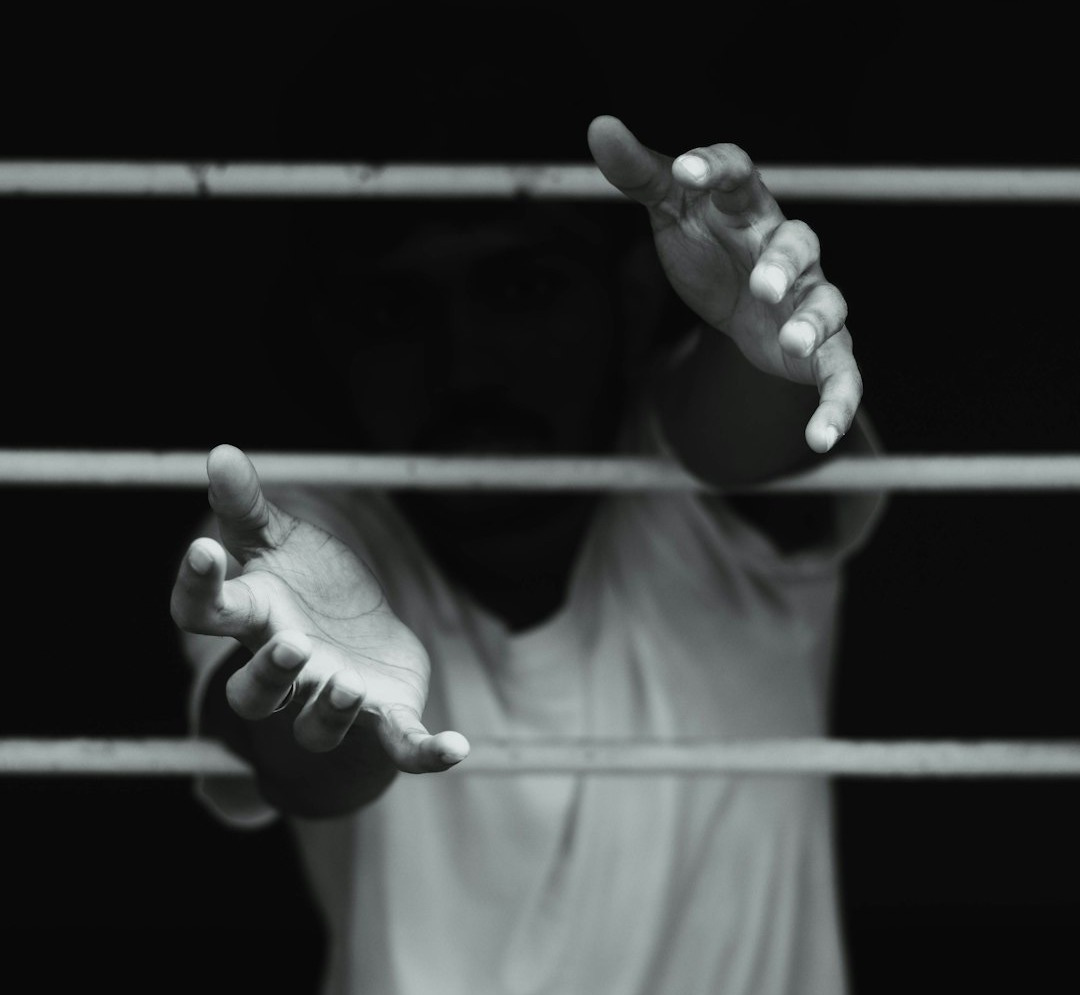
Why should you care?
I know, this doesn’t seem to be a really important topic, right? The reality is this is a vitally important topic because if we believe that all inmates stake a claim to innocence, we will be likely to ignore those who truly are. As of 2022 the number of inmates incarcerated in Florida alone was over 84,300 and that’s not including the federal system. We had the third largest population of prisoners in the nation. With that number growing it will be hard to find someone who does not have a loved one in prison or know someone who does.
But here’s the wake-up call.
An officer once cavalierly expressed to me on the way to the jail after my wrongful arrest that there were only “about 1 percent of those accused who were actually innocent,” as if to say that number is tolerable and justified by the 99 percent who are guilty.
I submit to you that the number of people who are wrongfully incarcerated is significantly higher than 1 percent, (some studies have it 5% or higher), but let’s not argue the point. At 1 percent the number of innocent people incarcerated would be over 843 as of 2022. Further highlighting the importance of this is the fact that we are not simply discussing 843 people, but also their family members who are often the silent sufferers of this topic.
And watch what happens to these numbers when we expand out of Florida. In the same year there were over 1.4 million people incarcerated in the state system alone. Again, this does not include the federal system or the jails. One percent of 1.4 million is 14,000!
That is 14,000 men and women incarcerated within our system of justice for crimes they did not commit. Here’s my question to you: What is the acceptable number of innocent people allowed to languish in our prisons for crimes they did not commit? I submit that it should be zero and we are well above that.

Liberty and freedom are purposefully protected under the Constitution of the United States. Yet those protections are growing weaker and weaker in practice within our judiciary and that mostly because we the people turn a blind eye to the plight of those who are truly innocent.
But I promise you this much; when it is you or your loved one, (and it will eventually be), you will feel very different when those liberties are wrongfully taken. You will want somebody to listen. What you won’t want to hear is that “everyone in prison says they are innocent.”
What can I do?
You might be tempted to think that there’s nothing you can do about it, but that’s definitely not true.
The first and most important thing is simple. Be interested. Start with finding out how to contact your state’s Innocence Project and do what you can to support those incredible lawyers and investigators who take on the cases of those they believe to be truly innocent.
These people work for free; the inmate is never charged anything for their representation and yet these lawyers do some of the best brief writing and courtroom presentations on the planet, knowing that they are representing innocent people; they do this with tons of heart and passion. Many times, they will be fighting for justice against a “system” that doesn’t enjoy admitting error.
That’s not to say that every prosecutor and judge is corrupt; that is definitely not the case. In fact, the majority are honest, hardworking individuals who also work tirelessly and of often thanklessly to do justice and protect us from criminal enterprise. To all of you in that category, thank you for what you do.
But the fact is, there’s too many people “slipping through the cracks” to not sound a warning bell. Too many people are wrongfully arrested, tried, convicted, and sent to prison. Change is needed!
Next, if you are in Florida, you can contact your state attorney and request that a Conviction Integrity Unit be established, modeled like the one in any of the (only four of 67) counties in the state.
These integrity units will often take on a case from the stateside when it is shown that a it has a legitimate claim to innocence, and it provides the same agency that convicted the inmate an opportunity to correct their (the state’s) wrongs.
This is important because it highlights that the hardworking, honest individuals I mentioned earlier who work for the state are actually “just" and willing to make right the wrongs that were committed against those who were wrongfully convicted. To do anything less in these situations is in itself a crime!
Finally, if nothing else, when you hear someone reiterate that phrase that all inmates say they are innocent, you can politely disagree and tell them why. If we all do this, we might be able to eliminate that wrongful thinking and that’s where it all starts.
Thank you for reading my words.
As I said above, I dedicate this first article to my best friend, Kevin Herrick, who continues to be wrongfully incarcerated for a crime he did not commit.
I could have been forgotten; but there were people who cared enough to spend years of their lives learning my story and seeking to correct it on my behalf. If I can pay that forward for people like Kevin, wherever I find them, using the strange fame of my reality, it will help me move forward as a truly free man and citizen.
Again, you can see more of his story at kevinisnext.com. Thank you for subscribing to this Substack and for caring. To be completely transparent, I am hoping to one day help support my family through these writings, but for right now I’m simply testing the level of interest. Therefore, I am publishing this edition for free. I truly hope to gain an audience because I believe that, together, we can really make a difference.
This is incredible Leo! I’ve been in your corner for years now and seeing you on a path to freedom and acknowledgement of your innocence (which I believe will happen) has been amazing.
Thank you for speaking to our judicial conference!!